

What Are Examples of Worms? (Biological and Digital)
Examples of worms span two very different worlds — living creatures and malicious software. Here’s a quick overview of both:
5 Biological Worm Examples:
- Lumbricus terrestris — the common earthworm, found in soil worldwide
- Ascaris lumbricoides — a human intestinal roundworm infecting up to 1.2 billion people
- Lineus longissimus — the bootlace worm, the longest worm on Earth at 58 metres
- Trichuris trichiura — the whipworm, a parasitic roundworm causing intestinal disease
- Haemonchus placei — the Barber’s pole worm, a major livestock parasite in Australia
5 Computer Worm Examples:
- ILOVEYOU — a 2000 email worm that caused billions in damage globally
- Mydoom — one of the fastest-spreading email worms ever recorded
- Netsky — a mass-mailing worm that flooded inboxes worldwide
- Stuxnet — a sophisticated worm targeting industrial infrastructure
- Conficker — a network worm that infected millions of Windows machines
Worms are everywhere — from your garden soil to your inbox. Biologically, they are soft-bodied invertebrates without limbs, belonging to several unrelated animal groups. Digitally, they are self-replicating programs that spread across networks without any human help. Both types can cause serious damage if left unchecked.
The word “worm” doesn’t point to a single category in biology. It covers creatures from multiple phyla — flatworms, roundworms, and segmented worms — that share a long, limbless body shape but are otherwise quite different. In cybersecurity, the term is equally broad, covering everything from crude email spam tools to precision-engineered cyberweapons.
I’m Faisal Shahzad, a technology writer covering cybersecurity, malware threats, and digital trends at SMP Web — and understanding every example of worms, both biological and digital, is central to the security and awareness content I produce here. Let’s break down the most important ones you need to know.
Biological Example of Worms: 5 Species to Know
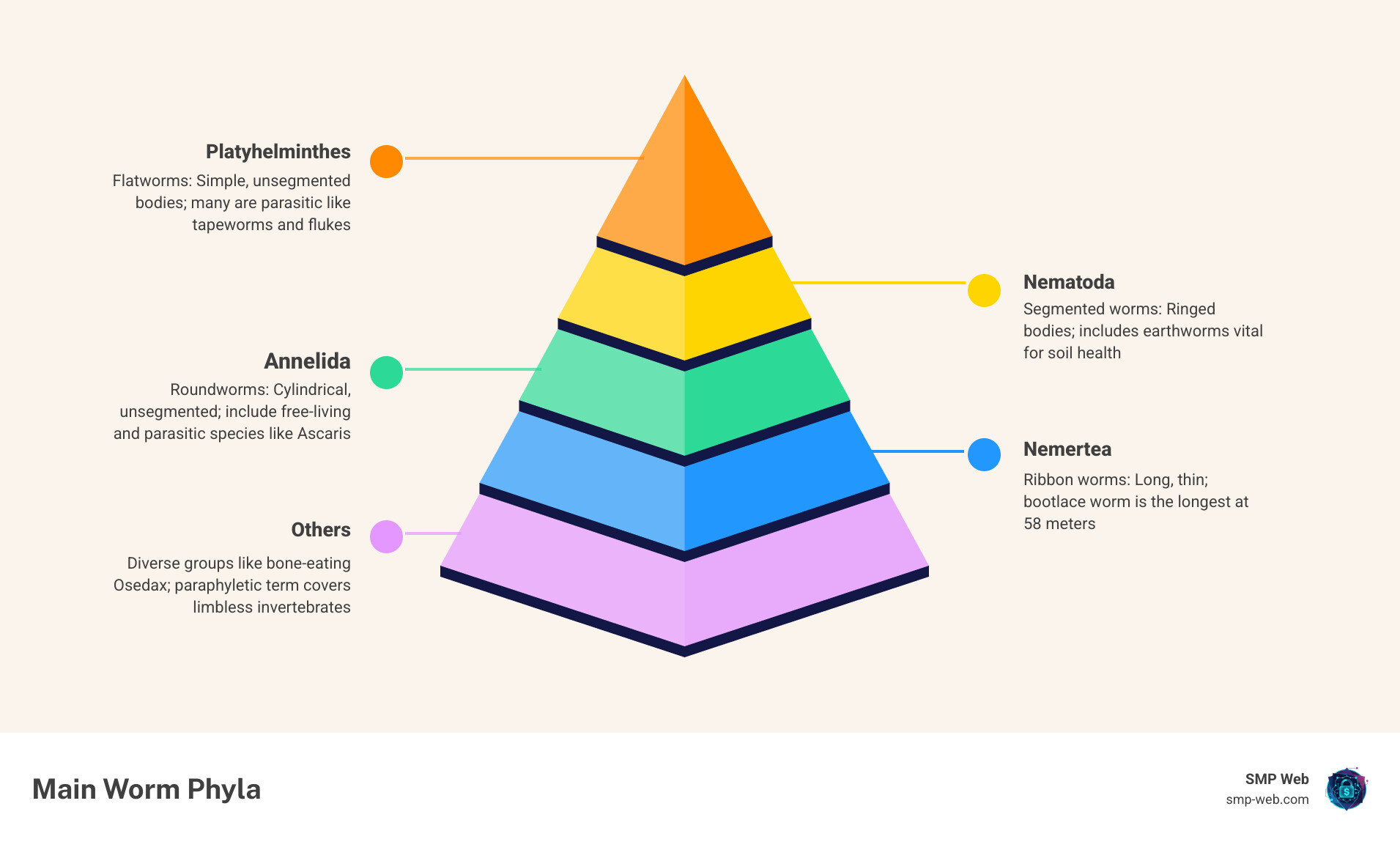
When we talk about a biological example of worms, we aren’t just talking about one family of animals. In fact, “worm” is what scientists call a “paraphyletic” group. This means it’s an informal name for a bunch of distantly related animals that just happen to look similar because they have long, tube-like bodies and no legs.
Most worms are bilateral animals, meaning if you split them down the middle, both sides look the same. They live in almost every environment on Earth, from the deep sea to the soil in your backyard, and even inside other animals. As of April 2026, biologists recognize three primary phyla that most people encounter:
- Phylum Annelida (Segmented Worms): Think of the common earthworm. Their bodies are divided into little rings or segments.
- Phylum Nematoda (Roundworms): These are smooth, tubular, and incredibly abundant. They can be found in soil, water, and as parasites.
- Phylum Platyhelminthes (Flatworms): These are soft, unsegmented, and—as the name suggests—flat. Some are beautiful marine creatures, while others are parasitic tapeworms.
To help you distinguish between them, we’ve put together a quick comparison:
| Feature | Flatworms (Platyhelminthes) | Roundworms (Nematoda) | Segmented Worms (Annelida) |
|---|---|---|---|
| Body Shape | Flat and thin | Cylindrical and smooth | Segmented and ringed |
| Digestive System | One opening (no anus) | Two openings (mouth and anus) | Two openings (complex organs) |
| Habitat | Marine, freshwater, parasitic | Soil, water, parasitic | Soil, marine, freshwater |
| Example | Tapeworms, Planarians | Ascaris lumbricoides | Lumbricus terrestris |
The Common Earthworm: A Soil Example of Worms
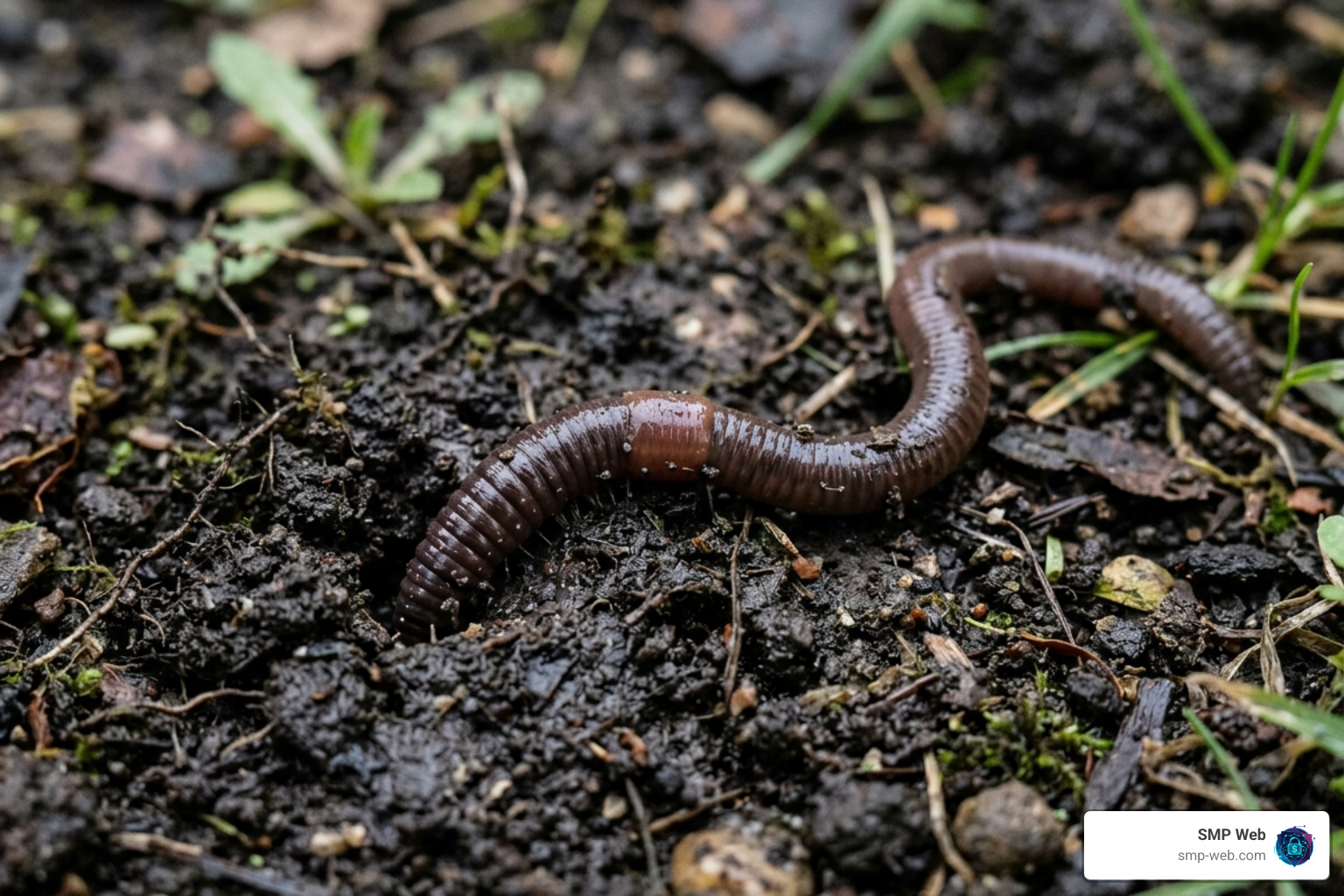
The most famous example of worms is undoubtedly the Lumbricus terrestris, also known as the common earthworm or “night crawler.” These guys are the unsung heroes of our gardens. As “ecosystem engineers,” they spend their lives eating soil and organic matter, which they turn into nutrient-rich waste called castings.
According to Earthworm Facts from National Geographic, earthworms can eat up to one-third of their body weight in a single day! This constant burrowing aerates the ground, allowing water and oxygen to reach plant roots. They also transport minerals from deep underground up to the surface.
In places like the British Isles, there are 31 terrestrial species of earthworms, nearly all belonging to the family Lumbricidae. They are hermaphrodites, meaning each worm has both male and female reproductive organs, though they still need a partner to mate. After mating, they form a lemon-shaped cocoon from a thickened band on their body called the clitellum, from which baby worms emerge in 2-4 weeks.
The Human Roundworm: A Parasitic Example of Worms
Moving from the garden to the human body, we find a much less pleasant example of worms: Ascaris lumbricoides. This is the largest and most common parasitic roundworm in humans, affecting an estimated 807 million to 1.2 billion people worldwide.
These worms are transmitted via the fecal-oral route. This usually happens when people ingest water or food contaminated with eggs from human feces—often a result of poor sanitation or using untreated waste as fertilizer. Once inside, the larvae hatch in the small intestine, migrate through the lungs (which can cause a cough), and are eventually swallowed back down to the gut to grow into adults.
An adult female Ascaris can grow up to 49 cm long and produce a staggering 200,000 eggs per day! While many infections are mild, heavy infestations can cause intestinal blockages and nutritional deficiencies, especially in children. Another common parasitic roundworm is the whipworm (Trichuris trichiura), named for its whip-like shape. Interestingly, some researchers are studying the “hygiene hypothesis,” suggesting that low-level exposure to certain worms might actually help prevent autoimmune diseases by “training” the human immune system.
Marine Giants and Microscopic Wonders
Worms come in sizes that defy imagination. On the tiny end of the scale, we have the Greeffiella roundworm, which holds the Guinness World Record for the smallest worm at just 80 micrometres long. It is so small and transparent that scientists can study its entire internal anatomy through a microscope.
On the other extreme, the marine world hosts some true monsters. The bootlace worm (Lineus longissimus) is a nemertean worm that can reach lengths of up to 58 metres (190 feet)—that’s longer than an Olympic swimming pool! Despite their length, they are very thin and fragile.
In the deep sea, we even find specialized species like the bone-eating worms (Osedax antarcticus). These fascinating creatures live on the carcasses of dead whales at the bottom of the ocean. They don’t have mouths or stomachs; instead, they secrete acid to dissolve whale bones and use symbiotic bacteria to absorb the nutrients.
Parasitic Impact on Livestock and Cattle
Worms aren’t just a human health issue; they are a massive economic burden on the agricultural industry. In Australia, internal parasites cost the cattle industry an estimated $94 million per year (based on 2015 data). These parasites include:
- Roundworms: Such as the Barber’s pole worm (Haemonchus placei), which sucks blood from the stomach lining, leading to anemia.
- Liver Flukes: These flatworms damage the liver, often leading to meat being downgraded or condemned during abattoir inspections.
- Tapeworms: Larval cysts can form in the muscles of cattle, affecting the quality of beef.
For farmers, managing these worms is vital for productivity. When cattle are heavily infected, they lose weight, produce less milk, and can even die, which directly impacts the food supply and market prices.
The Digital Plague: 5 Infamous Computer Worms
Now, let’s shift our focus to the digital world. In cybersecurity, a “worm” is a type of malware that can self-replicate and spread independently across computer networks. Unlike a standard virus, which usually needs a human to open a file or run a program, a digital example of worms exploits vulnerabilities in operating systems to jump from one machine to another automatically.
As we discuss in our guide on Modern Malware Explained, worms are particularly dangerous because of their speed. Once one computer on a network is infected, the worm can spread to hundreds of others in seconds.
Netsky and Mydoom
In the early 2000s, email-based worms were the scourge of the internet. Mydoom, discovered in 2004, became the fastest-spreading email worm in history. It used social engineering—tricking users into opening an attachment that looked like a technical error message—to infect computers. Once inside, it would harvest email addresses from the user’s contact list and send copies of itself to everyone.
Netsky was another mass-mailing worm from the same era. It was famous for its “war” with other malware creators; the author of Netsky actually included code that would remove competing worms like Mydoom from infected computers! While that might sound helpful, Netsky still caused massive network congestion and flooded inboxes globally. For more on these types of threats, check out our article on The Digital Plague.
Stuxnet and Industrial Impact
Perhaps the most famous example of worms in history is Stuxnet. Discovered in 2010, Stuxnet was a highly sophisticated cyberweapon designed to target industrial control systems (SCADA). Unlike typical worms that just want to spread, Stuxnet had a specific mission: to physically damage centrifuges used in nuclear enrichment.
Stuxnet used multiple “zero-day” exploits—vulnerabilities that were unknown to the software’s creators—to spread through local networks and even via USB drives. It proved that a digital worm could have devastating real-world physical consequences, changing the landscape of national security forever.
Key Differences Between Biological and Digital Worms
It might seem obvious, but biological and digital worms share more than just a name. Both rely on a “host” to thrive and both use “replication” to ensure their survival. However, their fundamental structures couldn’t be more different.
- Composition: Biological worms are made of collagen skin, muscles, and complex nervous systems. Digital worms are made of binary code (1s and 0s).
- Misconceptions: Many people confuse “worm-like” creatures with actual worms. For instance, mealworms, silkworms, and glow-worms are actually insect larvae, not worms. They have chitin exoskeletons and will eventually turn into beetles, moths, or flies. Biological worms never “grow up” into something else.
- Defense Mechanisms: To fight a biological worm, you need anthelmintic drugs (dewormers) or better sanitation. To fight a digital worm, you need firewalls, patches, and antivirus software.
- Stealth: While a tapeworm might hide in your gut for years, digital worms like spyware can hide in your system files to watch your every move. You can learn more about this in our 2024 Spyware Survival Guide.
Prevention and Control Strategies for 2026
As we move through April 2026, the methods for controlling both types of “worms” have become more advanced.
For Biological Worms:
- Hygiene: Simple handwashing after handling soil or using the toilet remains the best defense against parasites like Ascaris.
- Sanitation: Improving sewage systems and ensuring clean drinking water is the only way to eliminate soil-transmitted helminths.
- Medical Treatment: Drugs like Albendazole or Mebendazole are highly effective at clearing infections in just 1 to 3 days.
- Eradication Success: One of the greatest public health stories is the near-eradication of the Guinea worm (Dracunculus medinensis). By using simple water filters and educating communities, cases have dropped from 3.5 million in 1986 to just a handful in recent years.
For Digital Worms:
- Patching: Most worms exploit old software bugs. Keeping your operating system updated is your number one defense.
- Network Security: Using a firewall and avoiding suspicious email attachments can stop a worm before it enters your network.
- Proactive Monitoring: Use a complete security suite to scan for unusual network activity. For a deep dive, see our Complete PC Security Guide.
Identification remains a challenge in both fields. Identifying a specific earthworm often requires looking at microscopic features of a preserved specimen, while identifying a new digital worm requires “sandboxing”—running the code in a safe, isolated environment to see what it does.
Frequently Asked Questions about Examples of Worms
What is the longest worm ever recorded?
The marine bootlace worm (Lineus longissimus) is the longest, reaching up to 58 metres (190 feet). On land, the African giant earthworm (Microchaetus rappi) can reach lengths of 6.7 metres (22 feet).
Are worms and insects the same thing?
No. Insects have legs, segmented bodies protected by a hard chitin exoskeleton, and usually undergo metamorphosis. Worms are soft-bodied, have no legs, and their skin is usually made of collagen. Many “worms” like mealworms are actually just baby insects (larvae).
How do computer worms differ from standard viruses?
A virus needs you to do something—like click a link or open a file—to spread. A worm is self-contained and can spread across a network all by itself by finding and exploiting security holes.
Conclusion
Whether they are aerating the soil in Karachi, Pakistan, or attempting to infiltrate a corporate server, worms are a fundamental part of our world. Understanding every example of worms we’ve discussed—from the helpful earthworm to the destructive Stuxnet—helps us appreciate the complexity of biology and the necessity of digital vigilance.
At SMP Web, we are committed to making complex technology and biological topics accessible to everyone. If you’re worried about digital “worms” affecting your hardware, explore our PC security services and guides to keep your data safe in 2026 and beyond. Stay curious, stay updated, and most importantly, stay protected!
