
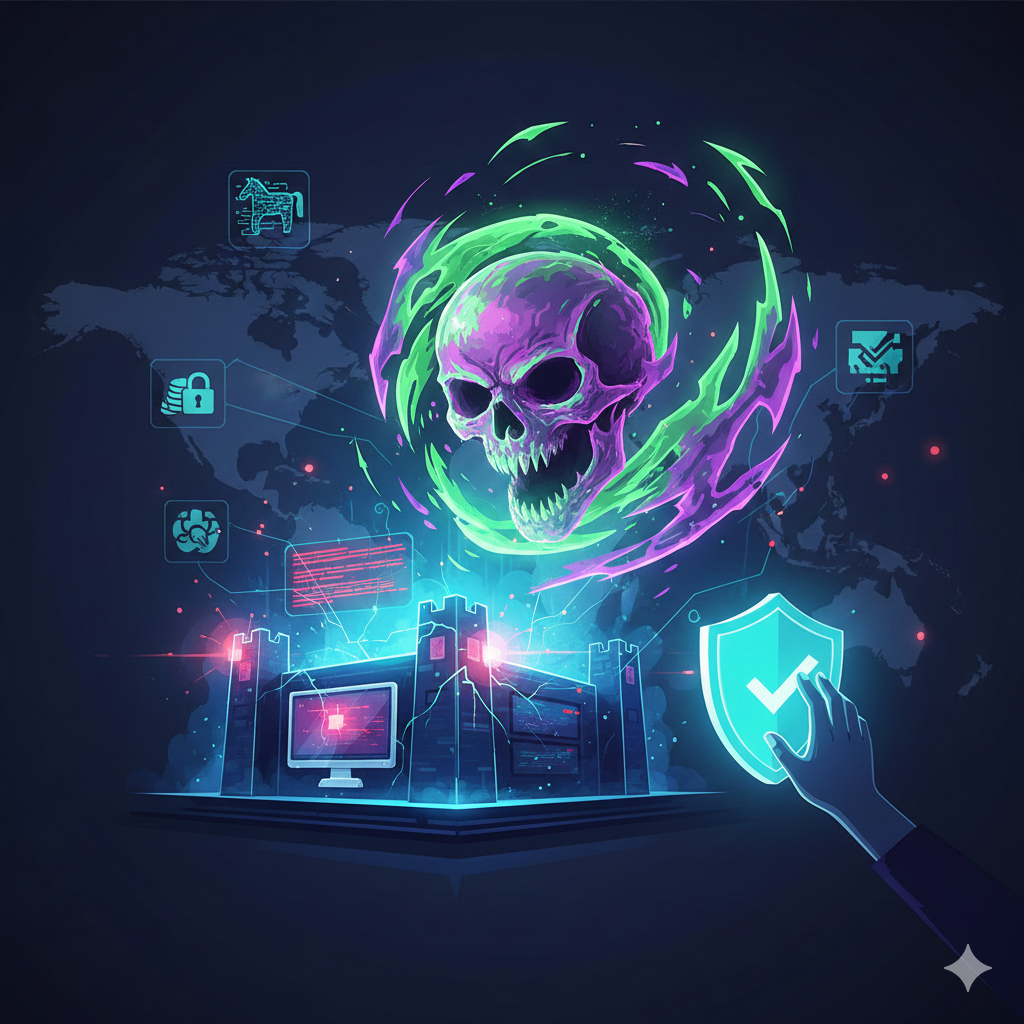
The digital world, for all its convenience and connectivity, harbors an ever-present darkness: malware. The term, a contraction of “malicious software,” acts as a blanket category for any program designed to inflict harm, disruption, or unauthorized access to a computer system, network, or data. Gone are the days when computer viruses were primarily the domain of amateur programmers seeking notoriety; today, the threat landscape is dominated by sophisticated, highly profitable criminal enterprises using cutting-edge techniques.
The shift is profound. What began as simple, self-replicating programs designed to be a nuisance has morphed into a multi-billion dollar extortion and espionage industry. For every user, business, or government agency, maintaining cybersecurity requires constant education and vigilance. By understanding the composition, mechanism, and objectives of the most prevalent digital threats, individuals and organizations can build robust defense strategies designed not just for yesterday’s viruses, but for the complex digital threat environment of today. This comprehensive guide serves as an essential resource for navigating the complexities of modern malicious software, providing clarity on different malware types, their infection vectors, and the vital steps required for proactive data protection.
Understanding the Foundation of Malicious Software
While the term “computer virus” is often used generically to describe any malicious program, it is technically only one specific type of threat within the broader category of malware. For effective cybersecurity, it is crucial to understand this distinction.
The Technical Difference: Virus vs. Malware
A virus is defined by its method of spread. Much like its biological namesake, a true computer virus requires a host—an existing executable file or document—to survive and replicate. When the user executes the infected file, the virus code runs, attaching copies of itself to other programs on the system. If the virus cannot attach itself to a host, it remains dormant.
Malware, conversely, is the encompassing term for all harmful software. This includes viruses, but also far more autonomous and dangerous types of threats that do not require a host program to spread. These autonomous programs include Worms (which self-replicate across networks independently) and Trojan Horses (which rely solely on deception to trick the user into executing them). The vast majority of modern threats encountered today fall into these autonomous categories, or are highly complex hybrids that blur the lines between them.
A Look at Historical Precedents
The early generation of digital threats, exemplified by the list of viruses that inspired this article (such as the W32/Mytob and Netsky families), primarily operated as mass-mailing worms with embedded backdoor functionality. Their objective was often system disruption, establishing remote access, or harvesting email addresses to propagate further.
-
Mass-mailing functionality (like that of the old Mytob variants) exploited the fundamental trust inherent in email. These threats would harvest contacts from the infected machine and email themselves out with deceptive subject lines, such as “Important Notification” or “Security measures,” using rudimentary social engineering to trick the recipient into opening the attached payload.
-
Backdoor functionality (like that of Backdoor.Zagaban) was used to turn infected machines into unwitting proxies or “zombie” computers, often degrading network performance or incorporating them into larger networks of compromised devices known as botnets.
-
Exploiting Vulnerabilities was a core strategy even then. The mention of the LSASS (MS04-011) exploit in relation to Netsky highlights a continuous theme in cybersecurity: attackers constantly seek and weaponize flaws in operating systems or popular software to gain entry and spread automatically across networks.
While the names of these specific threats are now historical, their underlying mechanisms—deception, network replication, and exploiting known flaws—form the blueprint for today’s most sophisticated digital threats.
The Modern Arsenal: Key Categories of Cyber Threats
Modern malware has refined these techniques, focusing overwhelmingly on financial gain, espionage, and large-scale disruption. The most critical threats today are characterized by their stealth, complexity, and specialized purpose.
Trojan Horses: The Deceptive Entry Point
Named after the ancient Greek myth, a Trojan Horse is any malicious program that disguises itself as legitimate or desirable software. Unlike a true virus or worm, a Trojan cannot spread autonomously; it relies entirely on social engineering to trick a user into downloading and executing it.
Once activated, the Trojan payload can vary widely:
-
Backdoors: As seen in older threats, these still allow remote intruders to bypass normal authentication methods and gain persistent, unauthorized remote access to the system. This access can be used to monitor activities, steal data, or launch further attacks.
-
Info-Stealers: These Trojans are specialized in harvesting sensitive data, including login credentials, banking details, and documents, transmitting them back to the attacker’s server.
-
Banking Trojans: Highly sophisticated variants that specifically target financial transactions, often injecting malicious code into web browser sessions to capture credentials or modify transaction details in real-time.
The key to a Trojan’s success is its deceptive packaging, often appearing as a software update, a pirated media file, or a legitimate email attachment.
The Autonomous Threat: Network Worms
Worms are a self-contained form of malware that can replicate and spread independently, without the need for an infected host file or user intervention. They typically exploit vulnerabilities in network protocols, operating systems, or software to hop from one computer to the next.
The mass-mailing worms of the past have evolved into highly targeted and devastating network-aware threats. A classic modern example is the WannaCry cryptoworm, which used the EternalBlue vulnerability to spread rapidly across global networks, delivering a Ransomware payload. Worms are primarily dangerous because their self-replicating nature allows them to cause exponential damage very quickly, often leading to network congestion, system crashes, and the delivery of secondary, more destructive payloads.
Ransomware: The Extortion Economy
If the early 2000s were defined by worms, the modern era is dominated by Ransomware. This category of malware is designed to encrypt a victim’s files, rendering them inaccessible, and then demand a ransom—usually in hard-to-trace cryptocurrency—for the decryption key.
Ransomware attacks are increasingly sophisticated, focusing on two primary modes of extortion:
-
Encryption: Holding critical data (files, databases, backups) hostage until payment is made.
-
Data Exfiltration (Double Extortion): Stealing sensitive data before encryption. Attackers then threaten to leak the data publicly if the ransom is not paid, applying maximum pressure to force a payout.
The impact of a Ransomware attack can be catastrophic, leading to massive financial losses, prolonged operational downtime, and severe reputational damage. It represents the pinnacle of financially motivated digital threat modeling.
Stealth and Control: Rootkits and Keyloggers
Some malware specializes not in destruction, but in concealment and espionage.
-
Rootkits: These are a specialized suite of programs designed to hide the existence of other malware (like a backdoor) by subverting the operating system itself. A Rootkit often gives an attacker administrative-level access (or “root” access) and is notoriously difficult to detect and remove because it can interfere with the security tools meant to find it. They enable persistent, covert control over a compromised machine.
-
Keyloggers: A specific type of Spyware that covertly records every keystroke made by the user, including usernames, passwords, credit card numbers, and private communications. They are often installed as a secondary payload by a Trojan Horse to facilitate widespread credential theft and identity fraud.
The Invisible Attack: Fileless and Hybrid Malware
The latest frontier in evasion involves non-traditional infection methods that bypass signature-based defenses used by older anti-virus software.
-
Fileless Malware: This is an emerging digital threat that does not rely on traditional executable files. Instead, it exploits legitimate, built-in operating system tools (such as PowerShell, Windows Management Instrumentation, or memory-resident functions) to execute malicious code directly in the computer’s memory. Because no malicious files are written to the hard drive, it leaves little or no trace for conventional forensic analysis or static Antivirus Software to detect, making it extremely challenging for standard endpoint security solutions.
-
Hybrid Malware: Recognizing that a single technique can be easily countered, modern attackers often deploy hybrid malware—a blended threat that combines the characteristics of several types. For instance, a single attack might use a Trojan for initial delivery, a Worm for network spread, and a Rootkit for concealment. This multifaceted approach is a major driver of the increasing complexity of cybersecurity.
The Vectors of Infection: How Malware Infiltrates Your System
Understanding how malware is delivered is just as important as knowing what it is. The delivery method, or vector, often relies on a blend of technical exploits and human error.
-
Phishing and Social Engineering: This remains the most popular vector. An attacker sends deceptive messages (email, text, social media) designed to trick the recipient into performing an action, such as clicking a malicious link, opening an infected attachment (often a Trojan Horse or a document with malicious macros), or revealing sensitive information. The mass-mailing techniques of old have been highly refined to create personalized, convincing communication.
-
Exploiting Software Vulnerabilities: Attackers actively search for flaws and bugs in operating systems, browsers, and third-party software. When a new vulnerability is discovered (a “zero-day” exploit), it is weaponized rapidly. Threats like the LSASS exploit referenced in the original source, or modern bugs used by worms, demonstrate that failing to perform Patch Management (keeping software updated) leaves a critical door open for attack.
-
Malicious Websites and Malvertising: Sometimes, simply visiting a compromised website can initiate a drive-by download, installing malware without the user’s explicit consent or even knowledge. Furthermore, Malvertising embeds malicious code into legitimate-looking advertisements that appear on reputable websites. Clicking the ad, or sometimes simply loading the page, can trigger an infection.
-
Physical Media and Network Shares: Although less common today, the transfer of infected files via shared network drives or external media (like a USB stick) remains a risk, particularly in corporate or shared environments. The original Zafi-D worm, for example, copied itself into folders with names containing “share” or “upload” to facilitate P2P spread.
Fortifying Your Digital Defenses: Essential Cybersecurity Practices
In the face of these continuously evolving digital threats, a single layer of defense is insufficient. Cybersecurity must be approached proactively, built on a foundation of layered security and user education.
1. Robust Endpoint Security
Every device—from desktops and laptops to servers and mobile phones—is a potential entry point. Modern Antivirus Software and Endpoint Detection and Response (EDR) solutions are vital. They must be kept updated to recognize new malicious signatures, but more importantly, they must utilize behavioral analysis to detect stealthy threats like Fileless Malware by monitoring system processes rather than just scanning files.
2. Proactive Patch Management
Given the prevalence of vulnerability exploits used by Worms and Trojans, keeping all software up-to-date is non-negotiable. Enable automatic updates for operating systems (Windows, macOS, Linux), web browsers, and all third-party applications. Patch Management is the first line of defense against known exploits.
3. Comprehensive Data Protection and Recovery
Since Ransomware is designed to cripple data access, the ultimate defense is a robust backup strategy. Follow the “3-2-1 rule”:
-
Three copies of your data.
-
On two different types of media.
-
With one copy stored off-site or air-gapped (physically disconnected from the network).
This ensures that even if the primary system is compromised and encrypted, the data can be recovered without paying the ransom.
4. Cultivating a Culture of Vigilance
Technology is only as strong as its weakest link—the human user. Continuous education is key to countering social engineering and Phishing attempts. Users must be trained to:
-
Verify before clicking: Scrutinize email addresses, check link destinations before clicking, and be suspicious of unexpected attachments.
-
Use Strong Authentication: Implement Two-Factor Authentication (2FA) or Multi-Factor Authentication (MFA) on all critical accounts (email, banking, cloud storage). This stops Keyloggers and credential-stealing Trojans from granting attackers entry, even if they possess the correct password.
-
Limit Privileges: Avoid running applications with administrative privileges unless absolutely necessary. This limits the damage a piece of malware can inflict upon infection.
Conclusion: A Commitment to Vigilance
The article that originally highlighted threats like Trojan.Lodear and the early Mytob worms underscored a timeless truth: digital threats are created daily. While the specific names change—from Netsky to WannaCry, from simple Trojans to complex Fileless Malware—the imperative remains the same. Maintaining a strong cybersecurity posture is not a one-time setup but an ongoing commitment to awareness, education, and the deployment of layered security measures. By integrating robust data protection strategies and fostering a culture of vigilance, individuals and organizations can significantly reduce their risk exposure and protect their vital digital assets from the next inevitable wave of malicious software.
