
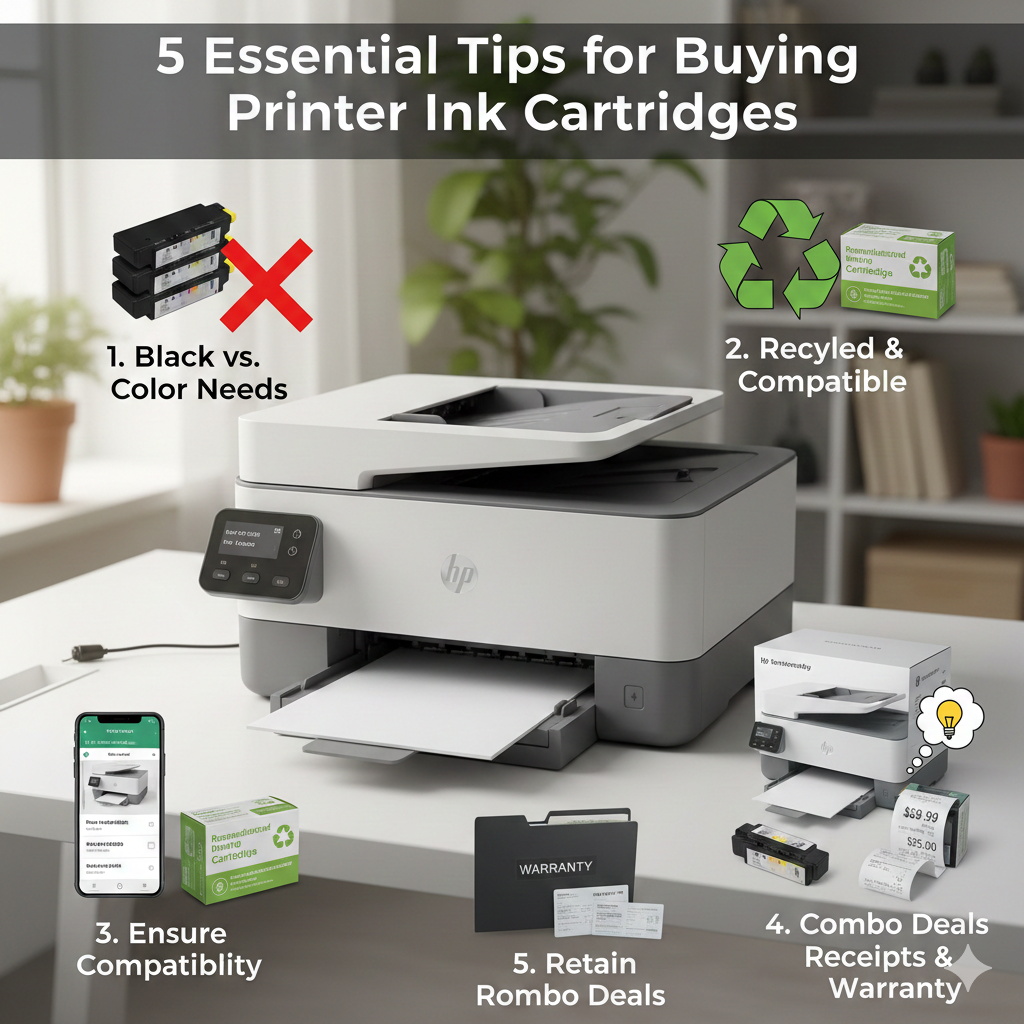
A Comprehensive Guide to Smartly Purchasing Ink and Toner
The humble printer remains a staple in homes and offices worldwide, yet the cost of replenishing its lifeblood—the ink or toner—can often feel like a punch to the wallet. Printer ink has been famously, and sometimes facetiously, compared to expensive liquids like rare champagne or even crude oil on a per-milliliter basis. Navigating the world of ink cartridges and toner can be confusing, but a savvy approach can save you significant money and hassle.
This guide provides five essential, yet often overlooked, strategies to help you make smarter decisions when purchasing printer ink, ensuring you get the best value, quality, and compatibility for your printing needs.
1. Differentiate Between Black and Color Needs: The Fundamental Cost-Saving Strategy
The most basic, yet most effective, way to cut down on your printing costs is to critically evaluate your need for color.
The Black-and-White Advantage
As a general rule, black ink cartridges contain pure black pigment and are typically designed to last longer and cost less than their color counterparts. Color printing, on the other hand, usually requires a composite of cyan, magenta, and yellow (CMY) inks, which may be housed in a single tri-color cartridge or individual cartridges (CMYK, with ‘K’ for black).
-
Cost Efficiency: If your printouts are purely text documents, forms, invoices, or internal drafts, they will work perfectly well in black and white. By defaulting your printer settings to grayscale or black-only printing, you drastically reduce the consumption of the more expensive color inks.
-
Print Quality vs. Requirement: Ask yourself: Will this document lose significant value or functionality if printed in black and white? For financial reports, legal documents, or academic papers where color is merely decorative, the answer is often no. Reserving color printing only for presentations, photos, or documents where color coding is essential will yield considerable savings over the printer’s lifetime.
-
Toner vs. Ink: For heavy-duty office use, many businesses opt for laser printers, which use toner (a fine, dry powder) instead of liquid ink. While the initial cost of a toner cartridge is higher than an ink cartridge, laser printers often have a significantly lower cost-per-page because toner cartridges yield thousands of pages. If your volume is high and mostly black-and-white, a laser printer and its corresponding black toner is the ultimate cost-saver.
Actionable Tip: Check your printer’s software settings. Most modern printers allow you to set the default to ‘Grayscale’ or ‘Black & White’ only. Make this change today and override it only when a color print is truly necessary.
2. Explore Environmentally and Economically Friendly Alternatives: Recycled and Remanufactured Cartridges
If you are both budget-conscious and concerned about your ecological footprint, moving beyond brand-new Original Equipment Manufacturer (OEM) cartridges is a powerful strategy.
The Rise of Sustainable Printing
Recycled ink cartridges and toner often fall under the categories of ‘remanufactured’ or ‘compatible’ cartridges.
-
Remanufactured Cartridges: These are genuine OEM cartridges that have been professionally cleaned, inspected, refilled with high-quality ink or toner, and tested for performance. This process keeps tons of plastic waste out of landfills and significantly reduces the carbon footprint associated with manufacturing new plastic shells.
-
Compatible Cartridges: These are brand-new cartridges produced by a third-party manufacturer, designed to function exactly like the OEM version. While they are not recycled, they are often substantially cheaper than the OEM product.
Weighing the Pros and Cons
| Feature | OEM (Original) | Remanufactured/Compatible |
| Cost | Highest | Significantly Lower (often 30%-70% less) |
| Environmental Impact | High (New plastic/components) | Low (Reuses plastic shells) |
| Reliability | Excellent | Generally good, but quality can vary by brand. |
| Warranty Risk | None | Some printer manufacturers suggest using them voids the warranty (though this is often debatable under consumer law). |
| Availability | Universal (Retailers, online) | Major office suppliers (like Staples or Viking Office Products) and specialized online vendors. |
Actionable Tip: When purchasing recycled or remanufactured products, always choose a reputable vendor with a strong return policy and customer reviews. High-quality vendors use premium inks that match OEM specifications, minimizing the risk of clogs or poor print quality. Look for ISO-certified manufacturers.
3. Ensure Absolute Compatibility: The Single Most Important Requirement
One of the most common mistakes consumers make is assuming that cartridges for the same brand of printer are interchangeable. They are not. Ink cartridges are precision-engineered to work with a specific model and manufacturer of printers.
Precision Matching is Key
The ink cartridge acts as more than just a reservoir; it contains specialized chips, print head components, and electronic contacts that must align perfectly with the printer’s chassis and software.
-
Model Number is Crucial: The single most important piece of information you need when buying ink or toner is the exact printer model number. This is usually found on the front of the machine, on a sticker inside the cartridge bay, or on the back/bottom of the unit.
-
Packaging Check: The outside packaging of the cartridge should clearly list the model numbers or series of printers it is compatible with. Do not rely on color, shape, or a verbal description alone.
-
Chip Recognition: Modern printers use sophisticated microchips on the cartridges to communicate with the machine. These chips track ink levels and authenticate the cartridge. If a cartridge is not compatible (or a poorly-made generic), the printer’s software may refuse to recognize it, rendering it useless.
Actionable Tip: If you struggle to remember the model number (e.g., ‘HP Envy 6055e’ or ‘Epson EcoTank ET-2800’), write it down on a sticker and affix it to the printer itself, or save it as a note on your phone. Better yet, when you find the correct cartridge for the first time, take a photo of the box and the printer model list on the side.
4. Seek Out Printer/Ink Cartridge Combo Deals: The Strategy of the Smart Bargain Hunter
It seems illogical, but sometimes, the price of a brand-new, entry-level printer bundled with a set of ink cartridges can be startlingly close to, or even less than, the cost of a single replacement cartridge. This is a common marketing tactic known as the “Razor and Blades Model.”
Understanding the Razor and Blades Tactic
Printer manufacturers often sell the hardware (the printer itself—the “razor”) at a minimal profit margin, or sometimes even at a loss. They make their substantial profit from the ongoing sale of the consumables (the ink/toner—the “blades”).
-
The Shocking Price Comparison: It is not uncommon to see a single black ink cartridge priced at $35.00, while a sale features a new basic printer plus a full set of setup cartridges (black and color) for $39.99.
-
Why This Happens: The manufacturer wants to lock you into their ecosystem. By purchasing the new combo, you secure a new machine, a full set of fresh cartridges, and are now a new, loyal customer for their high-margin replacement ink.
-
Maximizing the Deal: If you encounter such a deal, especially for a basic second printer or a machine intended for occasional use, the choice is clear.
| Option | Cost | Benefit |
| A. Single Ink Cartridge | $35.00 | Replenishes current printer. |
| B. New Printer + Cartridges Combo | $40.00 | New printer, fresh cartridges (black and color). |
For a mere $5.00 difference, you receive new hardware and two full cartridges, making Option B the obvious superior financial choice. You could then sell your old printer on an auction site or donate it, effectively upgrading your equipment for almost no net cost.
Actionable Tip: Before clicking ‘Add to Cart’ on a replacement cartridge, take five minutes to quickly check the price of a comparable, new entry-level printer bundle at major retail or office supply websites. You might be surprised by the bargain you find.
5. Always Retain Warranty Information and Receipts: Protecting Your Investment
Ink and toner cartridges are sensitive products. They can dry out, the print head nozzles can become clogged, or the internal chip can fail to register with the printer. Because of their expense, it is critical to protect your purchase with the manufacturer’s warranty.
The Value of Documentation
The majority of ink and toner cartridges sold by reputable manufacturers carry a satisfaction guarantee or a limited warranty. This warranty promises that the product will function correctly for a specified period or page count.
-
Proof of Purchase: The original purchase receipt is the single most important piece of documentation. Without it, a manufacturer cannot verify the purchase date to confirm the cartridge is within the warranty period.
-
Original Packaging: Retain the ink cartridge packaging and any included warranty slips. The packaging contains the specific product serial numbers, batch codes, and expiration dates the manufacturer will need to process a claim.
-
Troubleshooting First: Before initiating a return, perform basic troubleshooting as outlined in your printer’s manual: run a head cleaning utility, check that the protective tape has been completely removed, and ensure the cartridge is seated correctly.
Claiming a Replacement
Should your new ink cartridge fail to work as promised (e.g., printing blank pages, the printer refusing to recognize it, or ink levels displaying incorrectly), most manufacturers will follow one of two paths:
-
Direct Replacement: They will ship you a new, identical replacement cartridge at no cost.
-
Full Refund: They will refund the original purchase price entirely.
Actionable Tip: Create a dedicated “Printer Supplies” folder or digital folder. When you buy a cartridge, immediately file or snap a picture of the receipt and the cartridge box. If the product fails, having this information immediately on hand will save you significant time and ensure you receive the replacement or refund you are owed.
Conclusion: Printing Smarter, Not Harder
Buying ink cartridges and toner does not have to be a frustrating or expensive experience. By applying these five core strategies—distinguishing between black and color needs, embracing high-quality recycled options, ensuring absolute compatibility, looking for printer bundle deals, and diligently keeping your receipts—you transform yourself from a passive consumer into an empowered, smart shopper.
Printing is a necessity, but overpaying for it is optional. Start implementing these tips today to watch your supply costs shrink while keeping your documents looking crisp and professional.
